
Historian Jerry Egger: Suriname Must Stay in Control of the Oil and Gas Sector’s Impact’
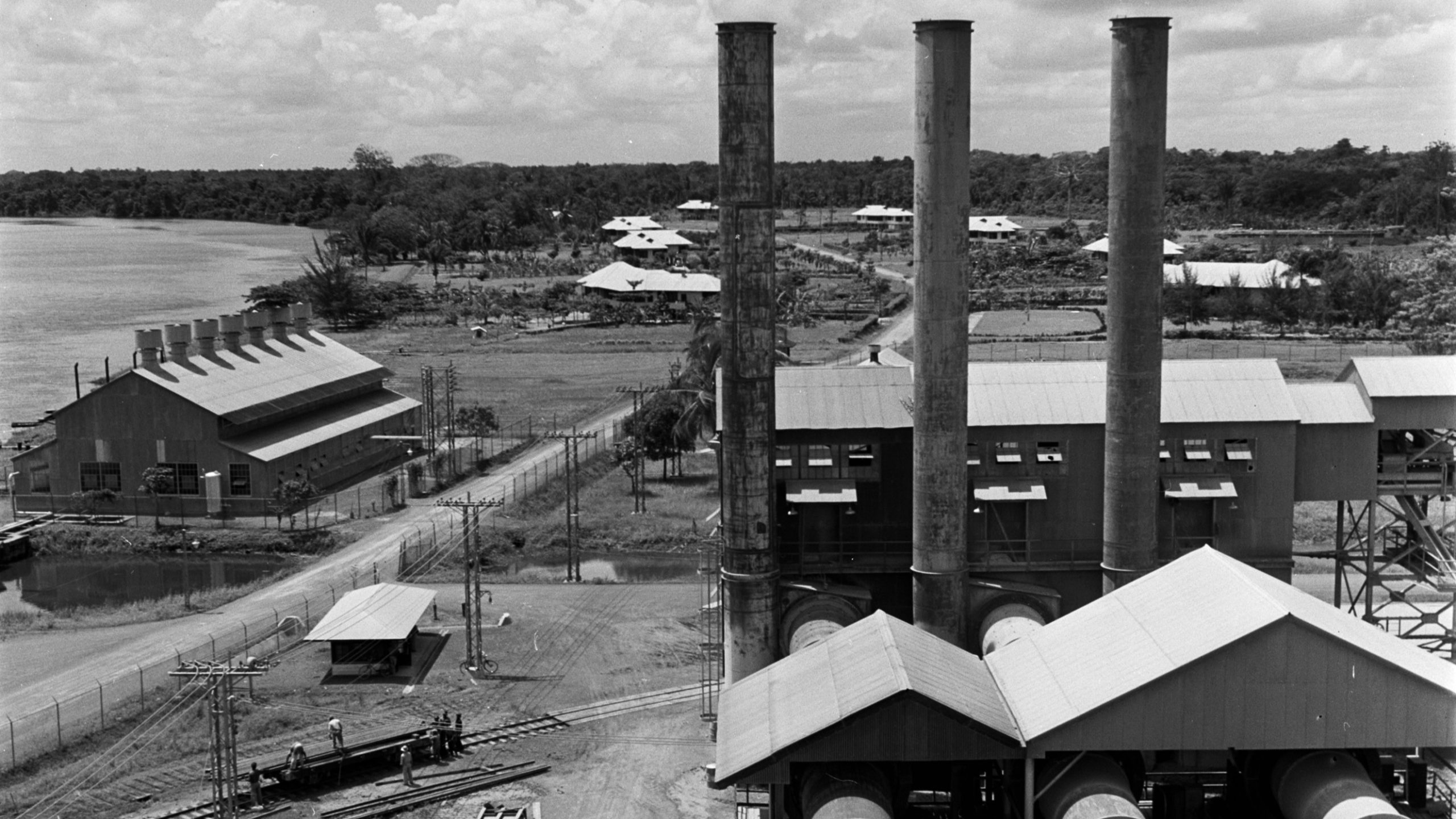
Many Surinamese still remember the illustration from their history books showing Suriname floating on a cork, with bauxite symbolizing the foundation on which the country’s economy rested. According to historian Jerry Egger, that scenario must not be repeated.
“Suriname has experienced the consequences of allowing its economy to depend on one or two products. You would hope we have learned from that experience,” Egger says. He warns that heavy reliance on a single sector can lead to a boom-and-bust cycle—a period of rapid growth followed by a sharp economic decline. “Our economy should never become dependent on just one or two products.”
As an example, he points to the bauxite era, when Suriname experienced an economic boom around the time of the Second World War and was no longer dependent on financial support from the Netherlands. “A few years later, however, that support was needed again,” Egger says.
Managing Resources Wisely
Oil prices are highly sensitive to international decisions and statements, particularly those made by major powers such as the United States. For that reason, Egger believes it would be unwise to base all of Suriname’s economic expectations solely on the oil and gas sector. “If you look at Guyana and talk to the average citizen, people will tell you they see bridges being built and new roads being constructed. But can you eat a bridge? Meanwhile, the prices of goods in the supermarkets continue to rise.”
Egger believes the government must manage the additional financial resources generated by the sector wisely. This should also include careful consideration of the direction of the education system. “This government has indicated that it wants to invest in healthcare and education, which is a positive step. But education must have a purpose. Will it remain general education, or will it be designed to prepare people for sectors such as mining, agriculture, and tourism?”
Rising Prices Are Inevitable
Egger particularly advocates for agriculture and tourism because, with the right policies, these sectors can provide a sustainable long-term future, whereas mining is finite. “When the natural resources are exhausted, the international companies will leave.” He stresses that Suriname itself must remain in control of how the oil and gas sector affects the country. That responsibility lies not only with the government but also with its citizens.
“Higher prices are inevitable, and people need to prepare for that. As an individual, you should look at where the jobs will be and which skills will be in demand. Then you should focus on acquiring those skills.” Egger also believes people should receive guidance on how to manage additional income responsibly. “They should use it wisely and set aside part of it for their retirement.” His advice is straightforward: “Think carefully about the consequences.”